
Earlier this week, strategist Karl Rove attacked Clinton's health, suggesting she suffered traumatic brain injury from a 2012 fall.
Her husband, former president Bill Clinton, insisted she works out regularly and is in "better shape" than him. And while he said there was nothing to Rove's charge, the ex-president acknowledged a candidate's health is fair game in national campaigns.
In addition, Clinton has been under attack for her handling of the 2012 terror attacks in Benghazi, Libya and on her record on the terrorist organization Boko Haram, which kidnapped nearly 300 Nigerian teenaged girls from their school and threatening to sell them.
The State Department, under Clinton, refused to designate Boko Haram — which is affiliated with al-Qaida — as a terror organization. That designation was not made until last November, well after Clinton had resigned as secretary of state.
Clinton's age has also come under fire. She will turn 69 years old two weeks before the 2016 election. Late President Ronald Reagan, in comparison, was eight months older than that when he ran for office in 1980.
The former first lady's history will be an issue should she decide to run, said Priebus Sunday.
"I think Hillary is a known product," he said. "Actually, I think it's sometimes worse running against a blank slate. Hillary has decades of history for us to explore."
Priebus said her role in "Hillarycare," her push for health insurance reform while she was still first lady, will be brought up, as will her experience as a New York senator, "where there's nothing significant to point to."
Further, Priebus said, Clinton's experience as secretary of state "is just not significant, but there's all kinds of problems with her."
And when she was asked questions about Benghazi and her response was "what difference does it make," Priebus said, "I assure you it will be an issue if she decides to run."
But Priebus said that despite calls for Rove to apologize for his comments, that will be "up to Karl Rove. He's a political operative."
But he thinks health and age is "fair game."
"It was fair game for Ronald Reagan. It's fair game with John McCain," said Priebus, noting that people attacked the Arizona Republican, saying he was "maybe psychologically not fit because he was a prisoner of war."
But he's not sure there is "a graceful way to bring up age, health, and fitness for a candidate that wants to be president of the United States. I think the more important issue for me as leader of this party is what's the record of Hillary Clinton? What was her record as a secretary of state, Benghazi, Boko Haram, Syria. Those are the issues."
Priebus, meanwhile, refused to speculate on Rove's claims.
"I'm not a doctor," Priebus said. "What I do know is the issue will come up as it does for any person running for president. What I think is going to make her rethink whether she should actually run for president... She's coming out with a book called "Hard Choices" or something like that. She's made a series of bad choices."
He also accused Clinton of trying to sweep Benghazi under the rug.
"If you want any evidence ask the families of people who lost their sons in Benghazi," he said. "They've talked plenty about what happened in Benghazi."


AIPAC and Iran’s war against America
 Caroline Glick
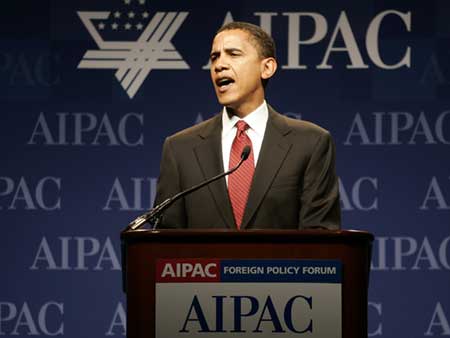
For its decision to pull anchor last Friday on its bid to pass new sanctions on Iran, AIPAC has been accused of slavish devotion to bipartisanship. Although the criticism is not without foundation, it is probably undeserved in this case.
AIPAC did not cut and run from the Iran sanctions fight because it consecrates two-party initiatives. It walked away because it lost.
If the Republicans controlled the Senate, it’s possible that AIPAC would have maintained its support for the bill’s immediate passage even in the face of President Barack Obama’s pledge to veto any sanctions law. But since the Democrats control the Senate, the bill was dead without Democratic support.
Once President Obama coerced Senate Democrats into ending their support for the bill’s passage, he killed the bill. And he didn’t kill it by making it a partisan bill per se. He killed it by making it impossible to pass the bill through the Senate.
In truth, AIPAC’s retreat from the Iran sanctions bill is probably a good thing. The pro-Israel advocacy group’s high-profile role in the US debate about Iran’s nuclear weapons program has caused US policymakers to confuse the issue.
Due in part to AIPAC’s leadership role over the past decade in getting anti-Iran sanctions passed through Congress, most Americans perceive Iran’s nuclear weapons program as an Israeli security problem, not an American problem. Since AIPAC is a lightning rod for isolationists in both parties, and for anti-Israel forces in the Democratic Party, its leadership role in the debate reinforced that perception.
Certainly it is true that Iran’s nuclear weapons program is the most acute threat that Israel faces to its long term survival.
But it is also the most acute national security threat facing the United States.
The Obama administration exploits AIPAC’s high-profile role in the Iran sanctions debate to accomplish two goals. With the American public’s interest and patience for foreign affairs at a low point, the White House has used AIPAC’s central role in the Iranian nuclear issue to discredit AIPAC.
The administration views AIPA C, and the American Jewish community more generally as an adversary in its bid to reposition the US on the world stage, by among other things, downgrading the US relationship with Israel to the level of EU-Israel ties.
Since last November, when the administration forged the deal with Iran that clears the path for Tehran to complete its nuclear weapons development in peace, the White House has actively endorsed the claim that AIPAC, or “the Israel lobby,” is using its supernatural powers on Capitol Hill to pass legislation that will force the US into war, for Israel.
This message was so incendiary that it became the focal point of news coverage of the Iranian nuclear weapons story.
And that in turn advanced the administration’s second goal.
That goal is to obfuscate the fact that Iran is working to acquire nuclear weapons, both as a means to become a regional hegemon, and to carry out its goal of destroying its enemies, including the United States.
Until Friday, the administration faced two obstacles toward achieving that goal: the Congressional sanctions bid, and Iranian behavior.
The sanctions bill wasn’t important as a sanctions bill per se. The sanctions placed on Iran’s economy over the past decade had either no impact or a marginal impact on Iran’s nuclear weapons program.
The sanctions bill was important because it demonstrated that it was the will of the American people, through their Congressional representatives, to prevent Iran from becoming a nuclear power. In other words, it said that Obama’s diplomatic fetish is not the be all and end all of American power.
By killing the bill, Obama did far more than weaken AIPAC. Indeed, the real impact so dwarfs whatever harm was caused to the hated Jewish group that it exposes the entire debate on AIPAC’s power or lack thereof as completely ridiculous.
By defeating the sanctions bill, Obama showed the mullahs that the domestic constituencies in the US that oppose Iran’s nuclear program are powerless to stop it. In other words, Obama told the Iranians that they have no reason to maintain even a pretense of good will or faith.
In truth, since Iran’s phony moderate Hassan Rohani was elected to the presidency last summer, Iran’s positive signals to the West have been so weak, that in a previous era, when reality played a greater role in US foreign policy, they would have been laughed off as pathetic feints.
But at least they were there.
No more.
Just hours after the Democrats withdrew support for sanctions, (and AIPAC declared defeat), Iranian television broadcast a documentary of a simulated military attack on Israel and on US military targets, replete with drone and missile strikes on the USS Abraham Lincoln, downing US aircraft, and striking US military installations in the Persian Gulf.
One of the interesting aspects of Friday’s broadcast of “The Nightmare of Vultures,” is that it follows a much shorter computer-simulated clip of Iranian attacks televised in early November.
That clip was broadcast a week before the conclusion of the interim deal, which enables Iran to complete it nuclear weapons program. Notably, the earlier clips only showcased Iranian strikes on Israeli cities.
The computer-simulated attacks on US targets were not included.
Friday’s dramatization of Iran’s war against America was followed on Saturday first with a verbal assault on the US by Iranian dictator Ali Khamenei.
In a speech before military officers, Khamenei referred to the US as Iran’s “enemy,” and he said that Americans are “controlling and meddlesome,” and that US officials are “lying” when they express friendship with the Iranian people and when they “tell our authorities that they are not after regime change in Iran.”
Hours after Khamenei rallied his military forces with his stirring “hate America” screed, Iranian Admiral Afshin Rezayee Haddad of Iran’s Northern Naval Fleet announced that the fleet was on its way across the Atlantic Ocean, headed for America.
In his words, “Iran’s military fleet is approaching the United States’ maritime borders, and this move has a message.”
Then on Sunday, Iran dropped the bombshell.
Speaking to Iran’s ISNA news agency, Behrouz Kamalvandi, a spokesman for Iran’s atomic energy agency, said that Iran will not allow International Atomic Energy Agency inspectors to visit the Parchin military nuclear complex.
Parchin is believed to be the site where Iran is combining the enriched uranium and other components of its nuclear program and building its actual arsenal.
Most recently, in August 2013, the private satellite imaging company Digital Globe published new photos of the Parchin facility. According to the Associated Press, those images indicated that Iran may be building nuclear bombs at the site.
One of the many flaws of the interim deal with Iran was that the US and EU did not insist on inspecting Parchin. Given that Parchin wasn’t included, there was no apparent reason for the Iranians to restate the known fact that Parchin was not part of the deal. And consequently, Kamalvandi’s statement cannot be viewed as posturing.
It has to be seen as a threat.
AIPAC’s withdrawal from the sanctions debate may or may not be good for AIPAC. But lawmakers – from both parties – would do their country a great service if they use the occasion of AIPAC’s departure to place the domestic US debate where it should have always been – on the dire threat Iran’s nuclear weapons program constitutes for the security of the United States of America.
The author’s new book, The Israeli Solution: A One- State Plan for Peace in the Middle East, will be released on March 4.